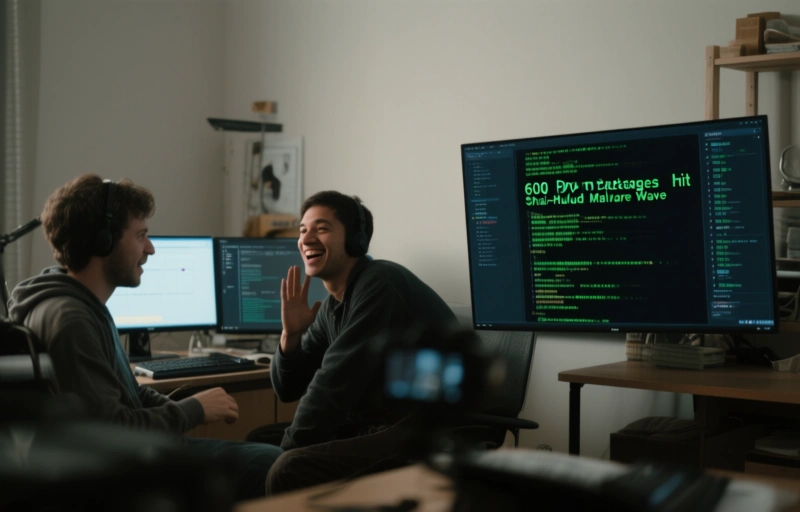
Over 600 malicious npm packages have been published as part of a Shai-Hulud supply-chain attack. Learn how to protect your code and what this means for developers.
If you've been following the world of software supply chain security, you know the npm ecosystem is a prime target for attackers. Today, a new wave of malicious packages has hit the index—over 600 of them, all part of a campaign called Shai-Hulud. That's a lot of potential trouble for developers who rely on open-source packages.
### What's Happening?
Threat actors published more than 600 malicious packages to the Node Package Manager (npm) index earlier today. These packages are part of a targeted supply-chain attack that aims to infect downstream projects. The campaign's name, Shai-Hulud, is a reference to the giant sandworms from the Dune series—fitting for something that burrows deep into your code.
The packages are designed to look legitimate, often mimicking popular libraries. But once installed, they can execute remote code, steal credentials, or exfiltrate data. For developers, this is a nightmare scenario. You think you're getting a useful tool, but you're actually opening a backdoor.

### How Does This Affect You?
If you're a developer or a team using npm packages, this is a direct threat. The attack exploits trust in the open-source ecosystem. Here's what makes it especially dangerous:
- **Stealthy naming:** The malicious packages use typosquatting or subtle name variations to trick developers.
- **Wide reach:** With over 600 packages, the attack can affect many projects simultaneously.
- **Automated deployment:** The attackers likely used automated tools to publish all these packages quickly.
You might be thinking, "I only use well-known packages, so I'm safe." But the attackers are smart—they target popular ones too, or they create fake versions that look identical. The best defense is vigilance.
### What You Can Do Right Now
Don't panic, but do take action. Here are some practical steps to protect your project:
- **Audit your dependencies:** Run `npm audit` to check for known vulnerabilities. Look for any suspicious packages in your lock files.
- **Use package locks:** Lock files like `package-lock.json` help ensure you're getting the exact version you expect.
- **Double-check package names:** Before installing, verify the package name and author. Look for recent updates or unusual activity.
- **Consider a registry proxy:** Tools like npm Enterprise or Verdaccio can help you control which packages are available to your team.
> "The open-source model thrives on trust, but trust alone isn't security. Every package you install is a potential liability." — Michael Miller
### The Bigger Picture
This isn't the first npm attack, and it won't be the last. Supply-chain attacks are on the rise because they're effective. One compromised package can infect thousands of downstream projects. That's why security experts emphasize the importance of minimal dependencies and regular audits.
For antidetect browser professionals, this is especially relevant. You work with tools that manage multiple identities and browser profiles. If you're using npm packages in your workflow, you need to be extra cautious. A compromised package could expose your team's data or compromise your clients' privacy.
### Final Thoughts
The Shai-Hulud campaign is a wake-up call. It highlights the need for better security practices in the JavaScript ecosystem. While the npm team is working to remove these packages, some may still linger. The best defense is a proactive approach: audit your code, question every dependency, and stay informed.
Remember, security isn't a one-time fix—it's a continuous process. Stay sharp, and keep your dependencies clean.