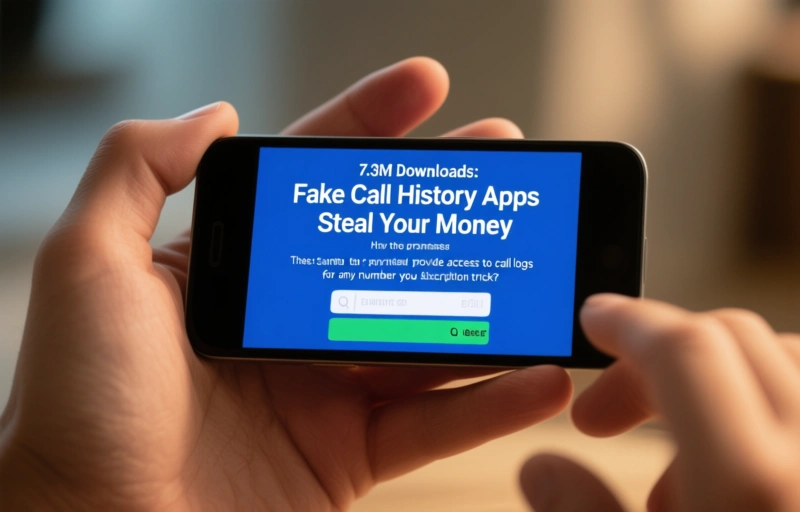
Over 7.3 million downloads later, 28 fake call history apps on Google Play Store tricked users into costly subscriptions with fake data. Learn how to spot these scams and protect your privacy.
You might think that if an app is on the Google Play Store, it's safe. But a recent discovery proves that's not always the case. Cybersecurity researchers found 28 fraudulent apps on the official Android store that promised to show you call histories for any phone number. Sounds useful, right? Well, it's a trap.
These apps didn't just fail to deliver. They tricked users into signing up for expensive subscriptions. Once you paid, you got fake data and a lighter wallet. The apps collectively racked up over 7.3 million downloads before being caught. One app alone accounted for more than 500,000 installs.
### How the Scam Worked
Here's the breakdown of how these apps operated:
- **False promises**: They claimed to provide access to call logs for any number you entered.
- **Subscription trick**: Users were lured into a paid subscription, often with hidden fees or unclear terms.
- **Fake data**: After subscribing, the app showed fabricated call history records.
- **Financial loss**: Victims lost money, sometimes recurring charges, without getting any real value.
It's a classic bait-and-switch, but with a digital twist. The apps looked legitimate, had decent ratings, and even had thousands of downloads. That's how they built trust.
### Why This Matters for Your Privacy
This isn't just about losing a few bucks. It's about trusting the platforms we rely on. Google Play Store is supposed to be a safe place, but scams like this slip through. The apps often request permissions that aren't needed, like access to your contacts or call logs. Even if you don't pay, you might be giving away sensitive data.
For professionals who use antidetect browsers to protect their online identity, this is a wake-up call. If a seemingly harmless app can steal from you, imagine what a malicious one could do. Always question what an app asks for. If a call history app wants your location, that's a red flag.
### Protecting Yourself from Play Store Scams
You don't need to avoid the Play Store completely. Just be smarter about what you download. Here are some tips:
- **Check the developer**: Look for a legitimate company with a website and contact info.
- **Read reviews carefully**: Fake reviews are common. Look for detailed, specific feedback.
- **Watch permissions**: If an app asks for access it doesn't need, skip it.
- **Use a antidetect browser**: For sensitive tasks, tools like antidetect browsers can mask your digital fingerprint, making it harder for scammers to track you.
These steps won't guarantee safety, but they'll reduce your risk. And if something sounds too good to be true, it probably is. Accessing someone else's call history without their knowledge? That's not just shady—it's illegal in most places.
### The Bigger Picture: Digital Trust Is Fragile
This incident shows how easily trust can be exploited. The apps had millions of downloads, yet they were designed to steal. It's a reminder that even official stores aren't foolproof. For anyone serious about online privacy, this is another reason to use tools like antidetect browsers. They help you control what information you share, even when an app tries to sneak past your defenses.
So next time you see an app that promises something too convenient—like viewing anyone's call history—pause. Think about what you're really signing up for. Your money and your privacy are on the line.