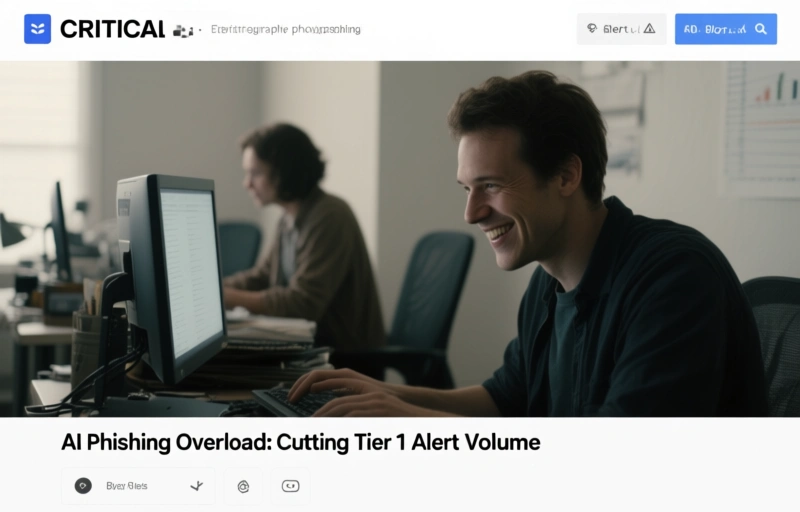
AI has turned phishing into a volume machine, overwhelming SOCs with fake alerts. Learn how to reduce Tier 1 overload and spot real threats before they cause damage.
Phishing has always been a numbers game. Attackers send out thousands of lures, hoping a few people bite. But AI has turned it into a volume machine, and that's crushing security operations centers (SOCs) across the United States.
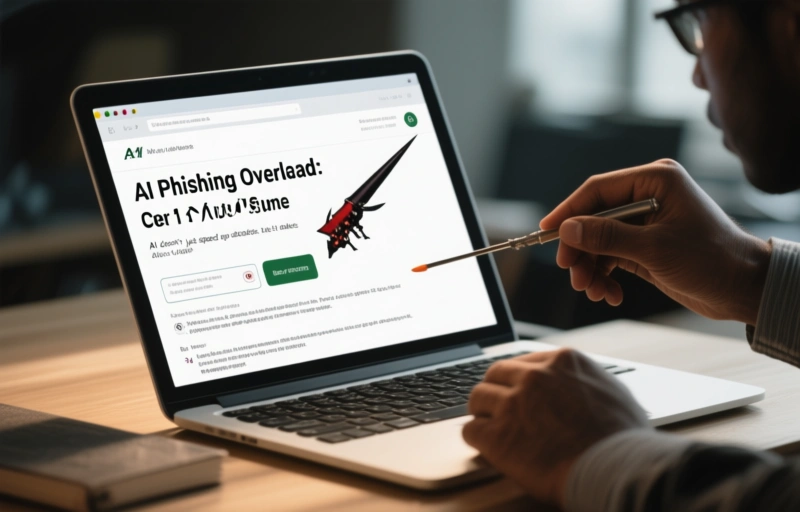
Here's the scary part: attackers can now create convincing emails, fake login pages, and tailored lures in minutes. Every polished message adds another case for Tier 1 analysts to review, another link to inspect, and another alert that can't be dismissed at a glance. The queue grows fast, and a real credential theft attempt or malware delivery can easily slip through the cracks.
### Why AI Makes Phishing So Much Worse
AI doesn't just speed up attacks. It makes them smarter. Traditional phishing emails were easy to spot—bad grammar, weird formatting, obvious scams. But now, AI-generated messages look like they came from your boss or your bank. They use your name, reference real projects, and even mimic writing styles.
- **Personalization at scale:** AI scrapes social media and company websites to craft messages that feel legitimate.
- **Faster iteration:** Attackers can tweak and retest campaigns in real time, adapting to filters and user behavior.
- **Lower cost:** Tools like ChatGPT make it cheap to generate thousands of unique emails, each one slightly different to avoid detection.
This flood of alerts creates a real problem for SOCs. Tier 1 analysts are drowning in noise. They have to triage hundreds of potential threats every shift, and that's exhausting.
### How Tier 1 Overload Hurts Your Security
When analysts are overwhelmed, they make mistakes. They might mark a real phishing attempt as "benign" just to clear their queue. Or they might ignore a subtle indicator because they've already seen 50 similar alerts that day. This is where the real damage happens.
Think about it: a single successful credential theft can cost a company thousands of dollars. In the US, the average cost of a data breach is now over $9 million. That's not just a tech problem—it's a business crisis.
### Practical Steps to Reduce Alert Volume
You can't stop AI-powered phishing from coming. But you can reduce the noise hitting your Tier 1 team. Here are a few strategies that work:
- **Automate triage with AI tools:** Use machine learning to filter out obvious false positives before they reach human analysts. This cuts the queue by 40% or more.
- **Focus on high-risk users:** Not every employee is equally likely to click a phishing link. Target training and monitoring on executives, finance teams, and IT staff who handle sensitive data.
- **Implement better detection rules:** Move beyond simple keyword matching. Use behavioral analysis to spot unusual login patterns or email forwarding rules that indicate compromise.
### A Real-World Analogy
Imagine you're a firefighter, and every call you get turns out to be a false alarm. After the 50th one, you start to slow down. You might even miss the one real fire because you're so tired of running to nothing. That's what Tier 1 analysts face every day. The goal isn't to eliminate all alerts—it's to make sure the real threats stand out.
### Conclusion
AI phishing isn't going away. It's only getting better. But by automating triage, focusing on high-risk users, and refining detection rules, you can reduce the volume that hits your team. Your analysts will be less stressed, and your organization will be safer.
Remember: the goal is to make sure the one real alert doesn't get lost in the noise.