CISA Flags Critical F5 BIG-IP Flaw After Active Attacks
Emily Davis ·
Listen to this article~5 min
CISA warns of active exploitation of a critical F5 BIG-IP APM flaw (CVE-2025-53521), urging immediate patching. The vulnerability allows remote code execution.
Hey there. If you're responsible for network security, you need to hear this. The U.S. Cybersecurity and Infrastructure Security Agency (CISA) just dropped a major warning. On Friday, they added a critical vulnerability in F5's BIG-IP Access Policy Manager to their Known Exploited Vulnerabilities catalog. That's the KEV list, and it's not a place you want your systems to be featured.
The reason? Simple. There's clear evidence that attackers are already using this flaw in the wild. They're not waiting around. This isn't a theoretical threat you can patch next quarter. It's happening right now.
### What Is CVE-2025-53521?
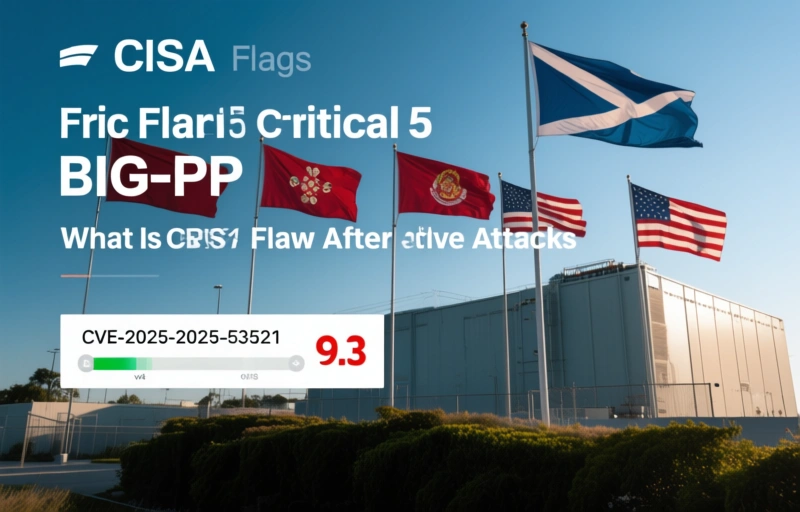
Let's break it down without the jargon. The vulnerability is tagged as CVE-2025-53521. Its CVSS v4 score is a whopping 9.3. For those not deep in scoring systems, that's about as serious as it gets. It's labeled 'critical' for a reason.
In plain English, this flaw could let a remote attacker run their own code on your F5 BIG-IP APM system. Think of it like someone finding a secret backdoor into the control room of your network's main gatekeeper. Once they're in, they have the keys to the kingdom.
### Why the KEV Catalog Matters So Much
You might wonder why this specific list is a big deal. The KEV catalog isn't just a general advisory. It's CISA's spotlight on vulnerabilities that are being actively exploited. When something lands here, federal agencies are legally required to patch it on a tight deadline. For the private sector, it's the loudest possible alarm bell.
Ignoring a KEV-listed flaw is like knowing there's a confirmed burglar in your neighborhood and still leaving your front door unlocked. The risk is verified, not hypothetical. The attackers have the blueprint and they're using it.
### What Should You Do Right Now?
First, don't panic. But do act quickly. Here's a straightforward list to get you started:
- **Identify Your Assets:** Immediately check your network for any instances of F5 BIG-IP Access Policy Manager (APM). You can't protect what you don't know you have.
- **Check Your Versions:** Determine if your systems are running a vulnerable version. F5 has released advisories detailing this.
- **Apply the Patch:** This is the non-negotiable step. Download and apply the official security update from F5 without delay. If you can't patch immediately, you must implement the recommended workarounds.
- **Monitor for Intrusion:** Ramp up your monitoring on these devices. Look for any unusual activity, unexpected processes, or unauthorized access attempts.
It's a hassle, I know. Patching critical infrastructure often means scheduling downtime and testing. But the alternative—a full system compromise—is infinitely more costly and disruptive.
### The Bigger Picture for Security Teams
This event is a perfect example of modern threat intelligence in action. CISA's move shows how public and private collaboration can work. They see active attacks, they verify the flaw, and they sound the alarm for everyone. It's a service, really.
For security professionals, it reinforces a few timeless lessons. Zero-day exploits are scary, but often it's these known, patchable vulnerabilities that cause the most damage. They get overlooked in the daily grind. Compliance deadlines slip. Testing gets pushed back.
A friend in the industry once told me something that stuck: "Patching isn't an IT task; it's a risk management decision." Every day you delay applying a critical fix for a KEV-listed flaw, you're consciously accepting a quantifiable risk. That's a tough position to be in.
So, take this as your nudge. Review your patch management policies. Make sure your team understands the urgency behind KEV alerts. Build a process that allows for rapid response when CISA raises the red flag. Your future self will thank you when the next critical alert hits the wire. Staying ahead of these threats isn't just about technology; it's about building a culture of swift, decisive action.