FBI Director's Email Hacked by Iranian Group
Robert Moore ·
Listen to this article~5 min
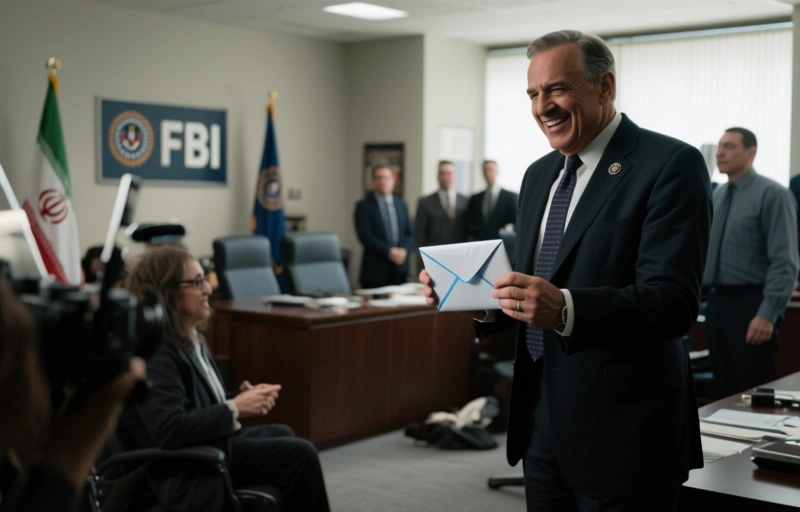
The FBI confirms Iranian-linked Handala hackers breached Director Kash Patel's personal email, publishing private photos and documents in a major security breach.
So here's something that'll make you think twice about your own digital security. The FBI just confirmed that the personal email account of Director Kash Patel was breached. And we're not talking about some random script kiddie here—this was the Handala hackers, a group linked to Iran. They didn't just peek around; they published private photos and documents for the world to see.
Think about that for a second. The FBI director. If someone that high-profile can get hacked, what does that say about the rest of us? It's a stark reminder that in today's world, digital privacy isn't just a luxury—it's a necessity. We're all vulnerable, from the biggest agencies to the individual sitting at their kitchen table.
### What We Know About the Handala Hackers
This group isn't new to the scene. Handala has been linked to several high-profile cyber operations originating from Iran over the past few years. They typically target government officials, journalists, and activists. Their methods are sophisticated, often involving:
- Spear-phishing campaigns that look incredibly legitimate
- Exploiting software vulnerabilities before they're patched
- Using social engineering to trick targets into revealing credentials
This attack on Director Patel fits their pattern perfectly. It's a bold move, designed to send a message as much as to gather intelligence. Publishing the materials adds public humiliation to the intrusion, amplifying the impact.
### The Real-World Fallout of a Digital Breach
When private emails and photos get dumped online, the damage isn't contained to ones and zeros on a server. Real lives get disrupted. Confidential discussions about ongoing investigations could be compromised. Personal correspondence that was never meant for public consumption suddenly becomes fodder for headlines.
It creates a chilling effect. If the head of the FBI can't keep his personal communications private, who can? This incident shakes trust in our institutions at a time when that trust is already fragile. It also raises serious questions about the security protocols in place for our nation's top law enforcement officials.
As one cybersecurity expert recently noted, 'We've entered an era where your digital footprint is more permanent than your physical one. A leaked document lives forever.' That's a sobering thought, isn't it?
### What This Means for Your Digital Hygiene
You might be thinking, 'I'm not an FBI director, so why should I worry?' Here's the thing—the techniques used against high-value targets eventually trickle down. The phishing email that fooled a government official last year might be in your inbox tomorrow, just with different branding.
Consider taking these basic steps to shore up your own defenses:
- Enable two-factor authentication on every account that offers it
- Use a password manager to create and store unique, complex passwords
- Be skeptical of unexpected emails, even if they appear to come from trusted sources
- Regularly update your software and operating systems
- Think before you click, especially on links requesting personal information
Digital security isn't about building an impenetrable fortress. It's about making yourself a harder target than the next person. Most hackers are looking for low-hanging fruit—don't be that fruit.
### The Bigger Picture of State-Sponsored Hacking
This incident isn't happening in a vacuum. It's part of a broader pattern of state-sponsored cyber operations that blur the lines between espionage, intimidation, and information warfare. When a group linked to a foreign government targets a sitting FBI director, it's more than a simple crime—it's a geopolitical statement.
These operations test boundaries. They probe defenses. They gather intelligence while simultaneously demonstrating capability. The publication of private materials adds a layer of psychological pressure, reminding targets that their digital lives are never truly secure.
For everyday citizens, the takeaway is clear: our personal data has become a commodity in international conflicts. The emails you send, the photos you store, the documents you create—they all have value to someone, somewhere. Protecting them isn't paranoia; it's pragmatism in a connected world where the front lines are often invisible.
The Patel email hack serves as a powerful wake-up call. It reminds us that in the digital age, privacy requires constant vigilance. From the highest levels of government to our own personal devices, we're all part of this new landscape. The question isn't whether we'll face threats, but how prepared we'll be when they arrive.