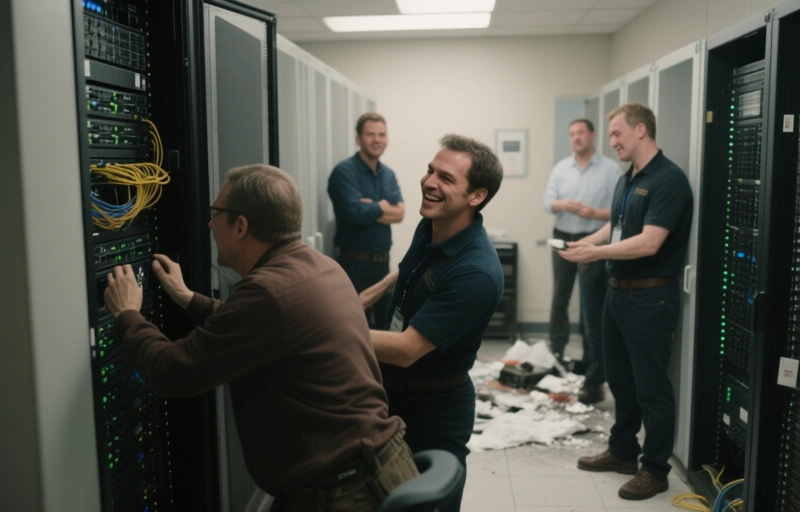
IT teams often struggle to quickly coordinate responses across disparate systems during network incidents. This upcoming webinar explores how automation and AI-assisted workflows can reduce response times and help prevent outages.
IT teams know the pain all too well. A network incident hits, and suddenly everyone is scrambling. You're juggling alerts from a dozen different tools, trying to figure out who owns what, and hoping no one drops the ball. It's chaotic, stressful, and frankly, it's costing you time and money.
But here's the thing: it doesn't have to be this way. The gap in network incident response isn't about a lack of effort—it's about a lack of coordination. When your systems don't talk to each other, your team ends up fighting fires blindfolded. That's where automation and AI-assisted workflows come in to save the day.
### Why Coordination Matters More Than Speed
Speed is great, but coordination is what actually prevents outages. Think of it like a relay race. If one runner is fast but drops the baton, the whole team loses. In network incident response, the baton is information. When your tools share data seamlessly, your team can respond faster and more accurately.
Automation helps by taking over repetitive tasks. For example, instead of manually checking logs across five platforms, an automated workflow can pull all the relevant data into one dashboard. AI then analyzes that data, spotting patterns a human might miss. Together, they reduce response times from hours to minutes.

### How AI Helps Your Team Stay Ahead
AI isn't here to replace your team—it's here to make them better. During an incident, AI can:
- Prioritize alerts based on severity, so you're not chasing false positives
- Suggest next steps based on past incidents, cutting down on guesswork
- Automate routine responses, like isolating a compromised device
This frees up your team to focus on the complex stuff that really needs human judgment. And because AI learns from every incident, it gets smarter over time.
### Practical Steps to Close the Gaps
Ready to fix your incident response? Start with these steps:
- **Audit your current tools.** List every system involved in detection and response. Identify where data gets stuck.
- **Map your workflows.** Document how incidents flow from detection to resolution. Look for bottlenecks.
- **Choose a platform that integrates.** Look for tools that play nice with your existing stack. Automation is only as good as its connections.
- **Test your setup.** Run tabletop exercises to see how your team handles simulated incidents. Adjust based on what you learn.
### The Bottom Line
Network incidents are inevitable. But the chaos doesn't have to be. By automating coordination and letting AI handle the heavy lifting, you can cut response times, reduce outages, and give your team the breathing room they need to work smarter. It's not about working harder—it's about working together.
So, take a look at your current process. Where are the gaps? And more importantly, what are you going to do about them?