Hacker Charged in $53M Uranium Crypto Exchange Heist
Robert Moore ·
Listen to this article~4 min
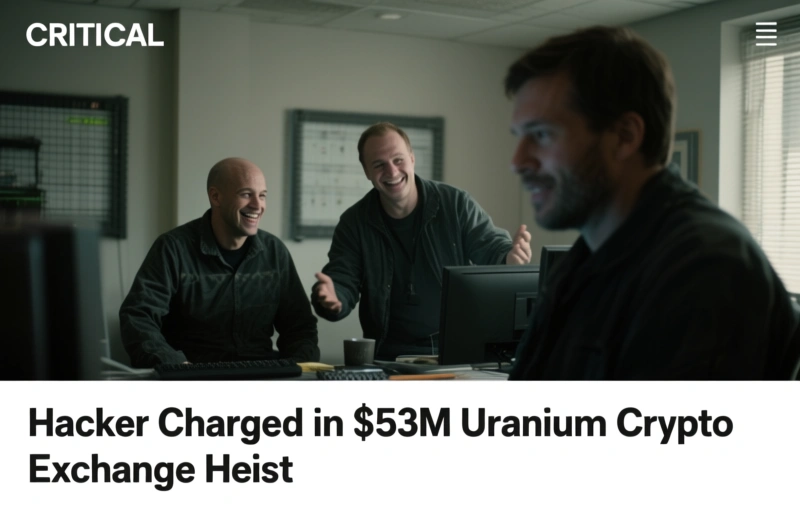
A Maryland hacker faces charges for allegedly stealing $53 million from Uranium Finance crypto exchange in two separate attacks, then laundering funds through a cryptocurrency mixer.
Let's talk about a case that's shaking up the crypto world. U.S. prosecutors just charged a Maryland man with pulling off one of the most brazen digital heists we've seen. He allegedly stole more than $53 million by hacking the Uranium Finance crypto exchange. Not once, but twice.
And here's the kicker—he didn't just take the money and run. He tried to wash it clean through a cryptocurrency mixer. That's like trying to hide a trail of digital breadcrumbs. It shows how sophisticated these attacks have become, and why digital privacy tools are suddenly on everyone's radar.
### The Anatomy of a Modern Digital Heist
This wasn't some smash-and-grab operation. Think of it more like a carefully planned digital bank job. The hacker allegedly breached Uranium Finance's defenses not once, but in two separate attacks. That persistence alone tells you something about today's threat landscape.
Security isn't something you set and forget anymore. It's an ongoing battle. When someone can walk away with $53 million, it makes you wonder about the safeguards in place. More importantly, it makes you think about your own digital footprint.
Here's what typically happens in these scenarios:
- Initial breach through vulnerabilities or social engineering
- Extraction of digital assets to controlled wallets
- Layering transactions through mixers or multiple addresses
- Attempted conversion to "clean" funds or other assets

### Why Crypto Mixers Complicate the Trail
Cryptocurrency mixers, sometimes called tumblers, are services that pool funds from multiple users. They shuffle everything together before sending it back out. The goal? To break the clear chain of ownership on the blockchain.
It's not inherently illegal—some people use them for legitimate privacy reasons. But in cases like this $53 million heist, they become tools for obscuring stolen funds. Law enforcement agencies have gotten better at following these trails, but it's like playing a high-stakes game of digital hide-and-seek.
As one cybersecurity expert recently noted, "The blockchain never forgets, but it can be made to tell a very confusing story."
### The Growing Need for Digital Privacy Awareness
Now, I'm not saying you need to become a digital ghost. Most of us aren't moving millions in crypto. But this case highlights something important—our digital lives leave traces everywhere. Understanding how those traces work matters more than ever.
Whether you're a crypto trader, a business owner, or just someone who values online privacy, there are basic steps everyone should consider:
- Use strong, unique passwords for every account
- Enable two-factor authentication wherever possible
- Be cautious about what personal information you share online
- Regularly review your financial and digital accounts
- Stay informed about common scams and attack methods
### What This Means for Crypto Security Moving Forward
When $53 million disappears, the entire industry takes notice. Exchanges will likely tighten their security protocols. Regulators might push for more oversight. And users? They'll become more skeptical about where they keep their digital assets.
That healthy skepticism isn't a bad thing. It drives innovation in security measures. It pushes developers to build better safeguards. And it reminds all of us that in the digital world, vigilance is part of the price of admission.
The truth is, technology moves fast. What was secure yesterday might be vulnerable tomorrow. Cases like this Maryland hacker remind us to stay curious, stay informed, and never assume our digital doors are locked tight enough.
At the end of the day, it's about finding that balance. You want enough security to protect what matters, without making your digital life feel like a fortress. Because the best security doesn't just keep bad things out—it lets good things flow freely while watching for trouble.
Remember, most of us will never deal with sums like $53 million. But the principles are the same whether you're protecting thousands or millions. Know your tools. Understand your risks. And never stop learning about this ever-changing digital landscape we all navigate together.