How Antidetect Browsers and Proxies Transform Web Security
Michael Miller ·
Listen to this article~4 min

Antidetect browsers and proxies are revolutionizing web privacy and security. Learn how these tools mask digital identities, protect professionals, and transform modern browsing practices in an increasingly tracked online world.
You know how websites seem to recognize you these days? They remember your preferences, your location, even your browsing habits. It's convenient, sure, but it also means you're being tracked constantly. That's where antidetect browsers and proxies come in—they're changing the game entirely.
Think of it like wearing a digital disguise. These tools help you browse without leaving fingerprints all over the web. For professionals managing multiple accounts or conducting sensitive research, they're becoming essential tools in the modern digital toolkit.
### What Exactly Are Antidetect Browsers?
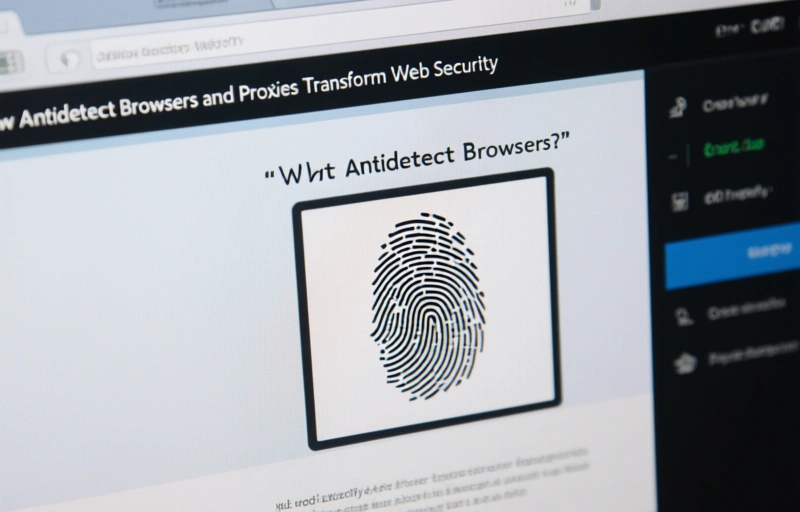
Antidetect browsers are specialized software that masks your digital identity. They modify browser fingerprints—those unique identifiers websites use to recognize you. We're talking about things like your screen resolution, installed fonts, time zone, and even your graphics card details.
Regular browsers give away all this information freely. Antidetect browsers let you control what gets shared. You can appear as a completely different device, from a different location, with different technical specifications. It's like having multiple digital identities at your fingertips.
### The Crucial Role of Proxies
Now, browsers are only half the equation. Proxies handle your connection's location data. Without a good proxy, your antidetect browser might still give away your real IP address. It's like wearing a perfect disguise but forgetting to change your shoes—you'll still be recognized.
Proxies route your traffic through different servers around the world. Residential proxies make your connection appear to come from regular home networks, while datacenter proxies offer faster speeds for different use cases. The combination of antidetect browsers with appropriate proxies creates a powerful privacy solution.
### Real-World Applications You Might Not Consider
Most people think these tools are just for privacy enthusiasts, but their applications are much broader:
- Digital marketers managing multiple client accounts without triggering security flags
- E-commerce professionals running price comparison research across regions
- Social media managers handling brand accounts from single locations
- Security researchers testing website vulnerabilities ethically
- Travel planners comparing flight prices without location-based markup
As one security expert recently noted: "The balance between personalization and privacy is shifting. Tools that give users control over their digital footprint aren't just about hiding—they're about reclaiming autonomy in an increasingly tracked world."
### The Technical Side Made Simple
Let's break down how these tools actually work. When you visit a website, it collects dozens of data points about your browser. Antidetect browsers modify these points systematically:
- They spoof your user agent to appear as different browsers
- They manage cookies in isolated containers
- They emulate different hardware configurations
- They control WebGL and Canvas fingerprinting
Proxies add another layer by masking your IP address. Residential proxies typically cost between $10-$50 per month for reliable service, while datacenter options might run $5-$30 monthly depending on bandwidth needs.
### Why This Matters for Modern Professionals
The web isn't getting simpler—it's getting more complex. Websites are deploying increasingly sophisticated tracking methods. Some sites now use behavioral analysis that monitors how you move your mouse or how quickly you type.
Antidetect browsers and proxies represent a fundamental shift. They're not about breaking rules; they're about leveling the playing field. They give users the same sophisticated tools that websites use to track them.
For professionals in the United States working with digital platforms, understanding these tools isn't just technical knowledge—it's business intelligence. Whether you're protecting client data, conducting market research, or simply maintaining your privacy, these technologies are reshaping what's possible online.
The conversation around web privacy is changing. It's no longer just about hiding from advertisers; it's about controlling your digital presence in a world that constantly tries to define it for you. And that's a shift worth paying attention to.