Iranian Hackers Breach FBI Director's Personal Email
Michael Miller ·
Listen to this article~4 min
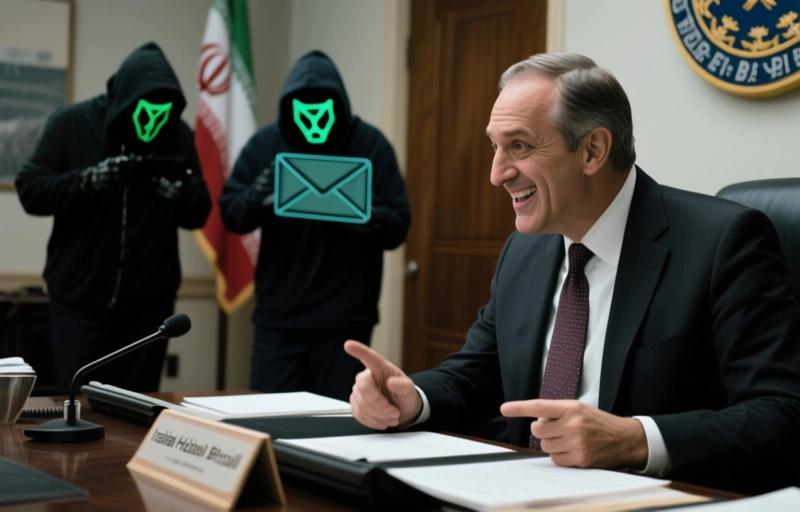
Iranian-linked hackers breached FBI Director Kash Patel's personal email, leaking photos and documents. The Handala Hack Team publicly claimed the attack, marking a bold escalation in digital threats against high-profile U.S. targets.
Let's talk about something that should make everyone pause. Iranian-linked hackers just pulled off what many would consider unthinkable—they successfully breached the personal email account of FBI Director Kash Patel. That's right, the head of America's premier law enforcement agency. They didn't just peek in either. They leaked a cache of personal photos and documents straight to the internet for the world to see.
Think about that for a second. If the FBI director's personal digital life isn't safe, what does that say about the rest of us? The group calling themselves Handala Hack Team made their intentions crystal clear. On their website, they posted a statement saying Patel would now find his name "among the list of successfully hacked victims." It's a bold, public declaration that feels more like a trophy display than a typical data breach.
### What This Breach Really Means
This isn't just another cybersecurity headline. This breach crosses a line we haven't seen crossed in quite this way before. We're talking about the personal communications and private materials of someone at the absolute highest level of U.S. national security. The implications ripple out in ways we're still trying to understand.
What were in those documents? We don't know all the details yet, but personal photos suggest this went beyond official correspondence. This was someone's private life being exposed. The psychological impact alone is significant—it's a violation that feels deeply personal, even when it happens to public figures.
### The Growing Threat Landscape
Here's what keeps security professionals up at night:
- State-linked groups are becoming increasingly brazen
- Personal accounts are now fair game in geopolitical conflicts
- The line between professional and private digital security has completely blurred
- Public shaming through data leaks is becoming a standard tactic
We used to think of these attacks as targeting government systems or corporate networks. Now? Your personal Gmail account could be part of an international incident. The tools and techniques once reserved for nation-states are trickling down, and everyone's digital footprint is potentially vulnerable.
### Protecting Yourself in This New Reality
So what can you actually do about it? First, recognize that your personal accounts might be more valuable than you think. They're often the weak link that gives attackers access to everything else. Use strong, unique passwords everywhere—no recycling. Enable two-factor authentication on every account that offers it, especially email.
Be careful about what you store in cloud services and personal accounts. Assume anything digital could eventually become public. That doesn't mean living in fear, but it does mean thinking twice before saving sensitive documents to personal email accounts.
As one security analyst recently noted, "When the FBI director's personal email gets hacked, we all need to reconsider our own security practices."
### The Bigger Picture
This breach isn't happening in isolation. It's part of a pattern where digital attacks are becoming tools of international pressure and messaging. The public nature of the leak—the announcement, the posting of materials—suggests this is as much about sending a message as it is about gathering intelligence.
We're entering an era where your inbox might be a battlefield. That sounds dramatic, but look at what just happened. The personal became political, the private became public, and the digital became dangerously real. The rules are changing faster than most of us can keep up with.
The truth is, we're all connected in this digital ecosystem. When someone at the highest level of security gets personally compromised, it's a wake-up call for everyone. Not just about better passwords or more security software, but about how we think about our digital lives in an increasingly connected—and increasingly targeted—world.