Iranian Hackers Target 4,000 US Industrial Control Devices
Michael Miller ·
Listen to this article~5 min
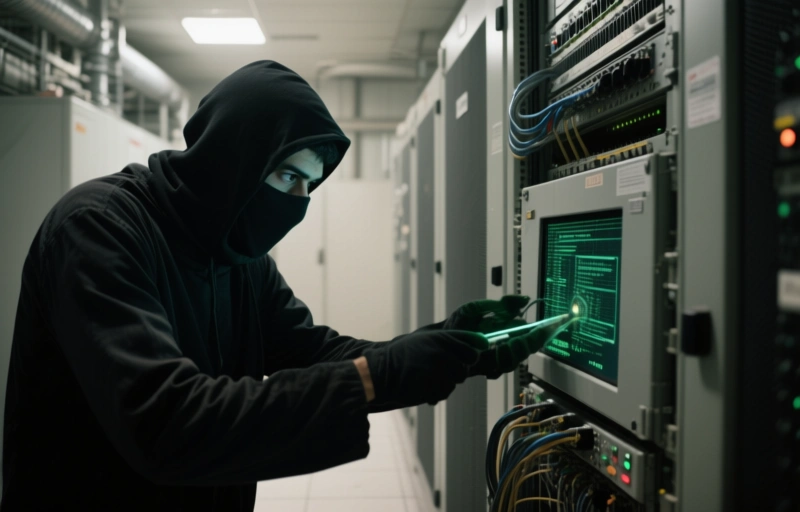
Iranian hacking groups are targeting thousands of exposed US industrial control devices, posing a direct threat to critical infrastructure security and physical operations.
Let's talk about something that should make every security professional in the US sit up straight. We're not dealing with theoretical threats anymore. Iranian-linked hacking groups have their sights set on American critical infrastructure, and they've found a massive opening.
Thousands of industrial devices are sitting exposed online, just waiting for the wrong person to find them. It's a sobering reality check for how we protect the systems that keep our country running.
### What's Actually Exposed?
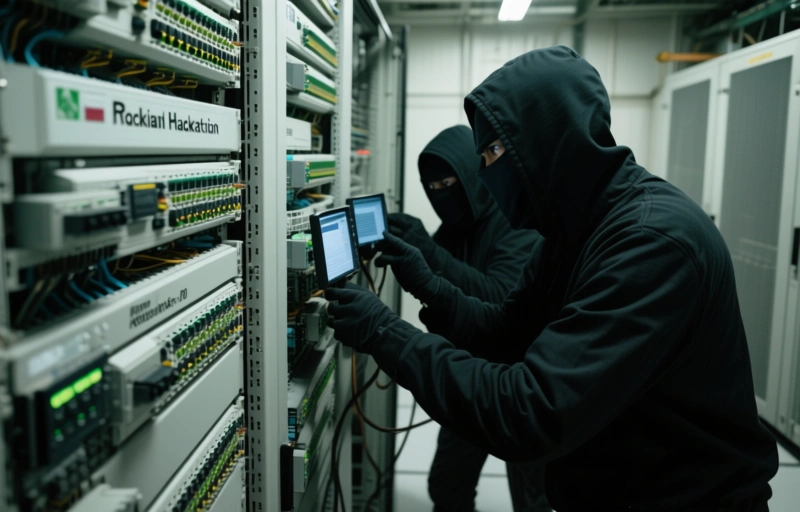
The attack surface here is shockingly specific. We're talking about programmable logic controllers, or PLCs, manufactured by Rockwell Automation. These aren't your average office computers. These are the brains of industrial operations.
They control everything from power grids and water treatment plants to manufacturing assembly lines. When these devices are exposed directly to the internet without proper safeguards, it's like leaving the back door to a factory wide open with a welcome mat.
Security researchers have identified nearly 4,000 of these Rockwell Automation PLCs connected to US networks with little to no protection. That's not a vulnerability—that's an invitation.
### Why This Matters Right Now
You might be thinking, 'This sounds like standard cyber espionage.' But here's the crucial difference. These aren't attacks aimed at stealing data. They're positioned to cause real-world, physical disruption.
Think about what happens if someone gains control of:
- Water treatment chemical balances
- Power grid distribution systems
- Factory safety shutdown protocols
- Pipeline pressure controls
The potential for harm moves from digital inconvenience to tangible danger. As one security expert recently noted, 'We've spent decades connecting industrial systems to networks for efficiency, but we're just beginning to understand the security cost of that convenience.'
### How Did We Get Here?
It's a perfect storm of factors. First, there's the ongoing digitization of industrial control systems. What used to be isolated, air-gapped networks are now connected for remote monitoring and management.
Second, there's often a knowledge gap between IT security teams and operational technology (OT) teams. The IT folks understand network security but not how PLCs function. The OT engineers understand the machines but not necessarily modern cyber threats.
Third, and perhaps most concerning, is simple configuration oversight. Many of these exposed devices were set up years ago with default credentials or minimal security because 'they were on an internal network.' Then someone connected that network to the internet without reassessing the security posture.
### What You Can Do Today
If you're responsible for industrial systems, don't panic—but do act. Here's a practical starting point:
- Conduct an immediate inventory of all internet-facing industrial control devices
- Verify that default passwords have been changed on every PLC and controller
- Implement network segmentation to isolate control systems from general business networks
- Establish continuous monitoring specifically for OT network traffic anomalies
- Develop and test incident response plans that address physical process disruptions, not just data breaches
Remember, security isn't about achieving perfection. It's about making yourself a harder target than the next organization. These Iranian-linked groups are conducting broad scans—they'll likely move on to easier prey if your basic defenses are in place.
### Looking Beyond the Immediate Threat
This situation with Iranian hackers targeting US infrastructure isn't happening in a vacuum. It reflects a broader shift in how nation-states approach cyber conflict. The barriers to entry for causing significant disruption are lowering every year.
What used to require specialized knowledge and physical access can now sometimes be accomplished with publicly available tools and an internet connection. That changes the game completely.
The good news? Awareness is growing. Industrial control system security is finally getting the attention it deserves. Companies are investing in specialized OT security teams, and information sharing between critical infrastructure operators is improving.
But we can't afford to be complacent. Every exposed device represents a potential entry point. Every unpatched vulnerability could be the one that gets exploited. The conversation needs to move from 'if' we'll be targeted to 'how well' we're prepared when it happens.
Take this as your wake-up call if you haven't already had one. Review your industrial control system security today—not next quarter, not after the next budget cycle. The threat isn't theoretical anymore, and the consequences of getting it wrong are too significant to ignore.