Meta now uses off-site business data to personalize your feed and AI responses, expanding beyond ads. Learn how this affects your privacy and what you can do to protect yourself.
Meta just made a big announcement. They're now going to use data that businesses share about you to personalize your Facebook feed and even your AI chatbot responses. This isn't just about ads anymore—it's about everything you see and interact with.
You might already know that companies often send info about your activity on their sites to Meta. They do this to make ads more relevant, like showing you that pair of shoes you almost bought. But now, Meta is taking it a step further. They'll use that same data to shape your entire experience.
"We already use this data - like games you play or products you browse - to improve ads," Meta said in a statement. "Starting this week, we'll also use it to personalize your feed and AI responses."
### What Does This Mean for You?
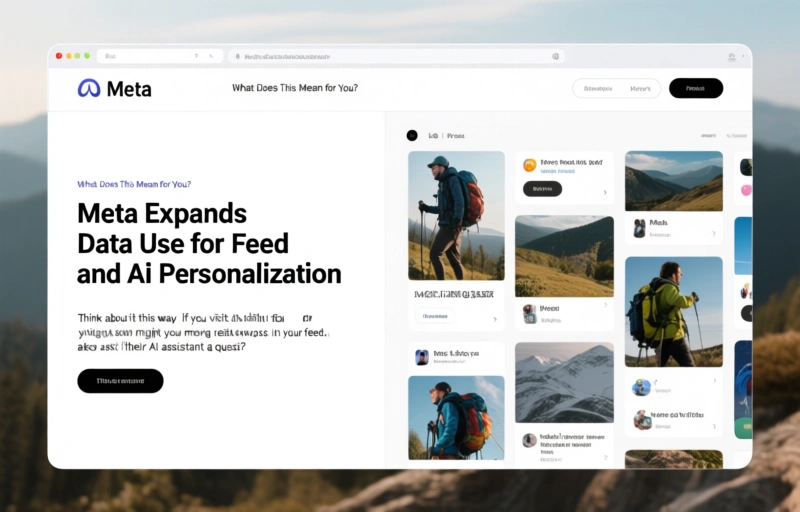
Think about it this way. If you visit a website for hiking gear, Meta might show you more hiking-related posts in your feed. Or if you ask their AI assistant a question, it could tailor its answer based on what you've browsed elsewhere. It's like having a digital butler who knows your interests—even if you didn't tell them directly.
This change is significant because it blurs the line between advertising and organic content. Your feed isn't just for friends and family anymore. It's becoming a curated space driven by your online behavior.
### How Businesses Share Your Data
Businesses have a few ways to send data to Meta. Here's the breakdown:
- **The Meta Pixel:** A small piece of code on a website that tracks your actions, like clicking a button or adding an item to your cart.
- **Conversions API:** A server-to-server tool that lets businesses send data directly, even without a pixel.
- **Offline Conversions:** Data from in-store purchases or phone orders, linked back to your online profile.
All of this data gets tied to your Meta account, even if you're not logged in. It's a massive web of information that Meta uses to build a detailed picture of who you are.
### Privacy Concerns Are Real
Let's be honest. This kind of tracking can feel creepy. You might wonder, "How does Meta know I was looking at camping gear?" The answer is that businesses shared that info, often without you realizing it.
Meta says they're transparent about this. They have settings where you can control how your data is used. But critics argue that these controls are buried deep in menus and hard to find. Plus, once data is shared, it's tough to pull it back.
"This is a classic case of function creep," said Emily Davis, Head of Digital Privacy at Antidetectbrowsershub. "Data collected for one purpose—ads—is now being used for another. It's a slippery slope."
### What You Can Do About It
If you're not comfortable with this, you have options. Here are a few steps you can take:
- **Adjust your ad preferences:** Go to Settings > Privacy > Ad Preferences. Turn off "Data from partners."
- **Use an antidetect browser:** Tools like those at Antidetectbrowsershub can mask your online fingerprint, making it harder for companies to track you.
- **Clear your cookies regularly:** This removes the tracking pixels that businesses use.
- **Limit off-Facebook activity:** In your Facebook settings, you can see which businesses have shared your data and disconnect them.
### The Bigger Picture
Meta's move is part of a larger trend. Companies want to personalize everything, from your news feed to your search results. But at what cost? Your privacy is becoming a currency, and you're spending it every time you click a link.
For professionals in the antidetect browser space, this is a reminder of why privacy tools matter. The more data companies collect, the more you need to protect yourself.
Meta's announcement might seem small, but it's a shift in how we think about online data. It's no longer just about ads. It's about shaping your entire digital world based on what you do elsewhere.
So, what do you think? Is this personalization helpful, or is it an invasion of privacy? Either way, it's happening—and now you know about it.