Microsoft releases record 206 security patches, including three zero-days and critical RCE bugs. Learn what this means for antidetect browser users and how to stay protected.
Microsoft just dropped a massive security update—its biggest ever. On Tuesday, the tech giant fixed a record 206 vulnerabilities across its software lineup. That includes three zero-day flaws that were already public when the patches came out. If you're in IT or cybersecurity, this is the kind of patch Tuesday that keeps you on your toes.
### What's at Stake?
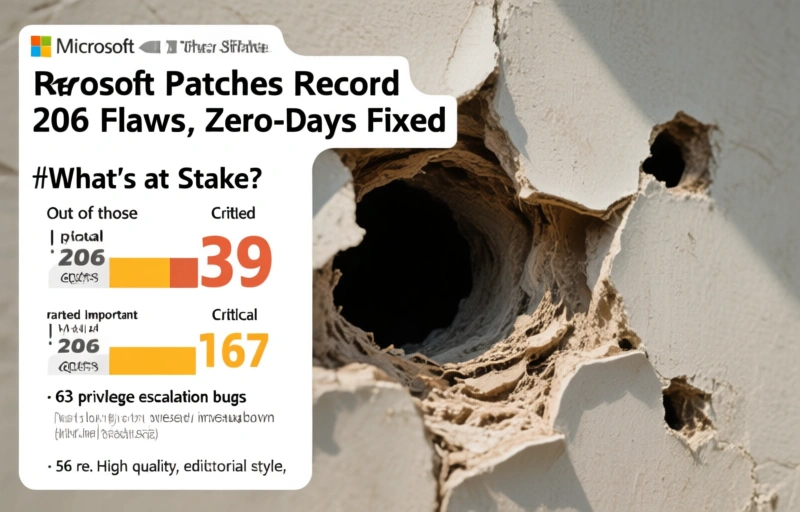
Out of those 206 flaws, 39 are rated Critical and 167 are rated Important. That's a lot of holes to plug. The breakdown is pretty telling:
- 63 privilege escalation bugs
- 56 remote code execution (RCE) issues
- 30 information disclosure flaws
- 27 spoofing vulnerabilities
- 20 security feature bypass problems
Remote code execution is the big one here. Think of it like leaving your front door unlocked—attackers can walk right in and take control of your system. These RCE bugs let hackers run malicious code on your machine without your permission. For businesses, that's a nightmare scenario.
### Why This Matters for Antidetect Browser Users
Now, you might be wondering, "What does this have to do with antidetect browsers?" Well, everything. Antidetect browsers are all about privacy and security. They help you stay anonymous online by masking your digital fingerprint. But if your underlying system is vulnerable, all that protection is useless.
Imagine you're using the best antidetect browser to manage multiple accounts or protect your identity. You've got your browser fingerprint randomized, your IP masked, and your cookies isolated. But then a hacker exploits an RCE bug in Windows to install malware on your machine. Suddenly, your antidetect setup doesn't matter—they're already in.
That's why keeping your software patched is just as important as using a good antidetect browser. It's like locking your car doors but leaving the window open. You need both layers of security.
### The Zero-Day Threats
The three zero-day flaws are especially concerning. These are bugs that were already known to attackers before Microsoft released patches. That means hackers had a head start. One of them, tracked as CVE-2024-21345, is a privilege escalation bug in Windows Kernel. Another, CVE-2024-21346, affects Microsoft Exchange Server and could let attackers gain admin rights. The third, CVE-2024-21347, is a remote code execution flaw in Windows Print Spooler.
For professionals using antidetect browsers to handle sensitive tasks—like managing ad accounts or running e-commerce stores—these zero-days are a direct threat. If your system gets compromised, your browser's privacy features won't save you.
### What You Should Do Right Now
First, install these patches immediately. Don't wait. Microsoft releases updates on the second Tuesday of each month, but this one is urgent. Go to Windows Update and check for updates. If you're running enterprise software, work with your IT team to deploy patches quickly.
Second, review your security setup. An antidetect browser is a powerful tool, but it's not a silver bullet. Combine it with:
- A good antivirus program
- Regular software updates
- Strong passwords and two-factor authentication
- A VPN for added privacy
Third, stay informed. Cybersecurity threats evolve fast. Follow trusted sources for patch announcements and security news. Being proactive is way better than cleaning up after an attack.
### The Bigger Picture
This record-breaking patch count shows how complex modern software has become. Every new feature is a potential vulnerability. For digital privacy professionals, it's a reminder that no system is 100% secure. The goal is to minimize risk, not eliminate it.
Using the best antidetect browser you can find is a smart move. But it's just one piece of the puzzle. Combine it with good security habits, and you'll be miles ahead of most people.
Stay safe out there. Your digital identity is worth protecting.