Shift CEO Neil Henderson on Customizable Browsers
Emily Davis ·
Listen to this article~4 min

A conversation with Shift CEO Neil Henderson on the rise of customizable browsers, user control, and what it means for digital privacy and professional workflows.
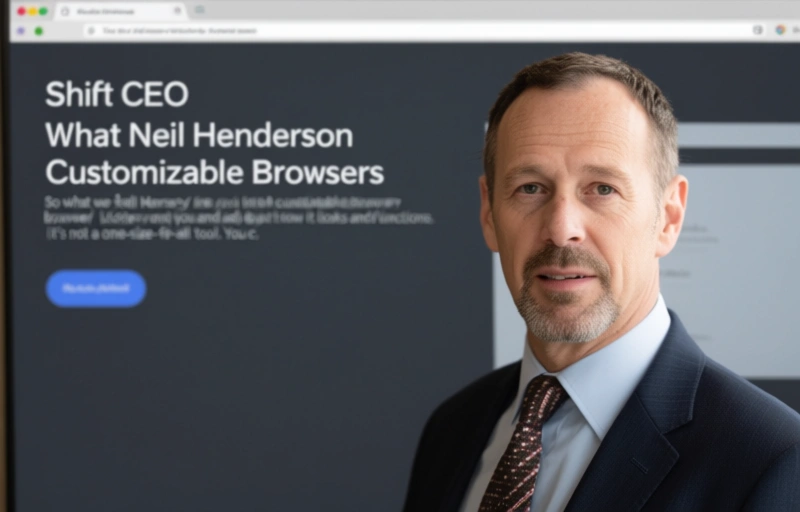
You know how sometimes you're working online and you just wish your browser could do more? Like, really adapt to what you need? That's the whole idea behind customizable browsers, and recently, I got to dive into a conversation with Neil Henderson, the CEO of Shift, about this very topic.
It's not about some fancy, complicated tech speak. It's about making your digital life easier. Think about it—how many tabs do you have open right now? How many different apps do you jump between? A customizable browser aims to streamline that chaos into something that actually works for you.
### What Makes a Browser Customizable?
So, what are we really talking about here? A customizable browser lets you tweak and adjust how it looks and functions. It's not a one-size-fits-all tool. You can organize your workspace, integrate the tools you use daily, and create a setup that feels intuitive. Neil described it as building your own digital command center, tailored to your specific workflow.
This is different from just using extensions. It's about the core experience being malleable. For professionals who manage multiple accounts or need to separate different types of work, this level of control is a game-changer. It helps reduce context switching, which we all know can kill productivity.
### The Shift Philosophy: User Control
During our chat, Neil emphasized a core principle: user sovereignty. The goal isn't to lock you into their system, but to give you the keys to build your own. He talked about moving away from the rigid structures of traditional browsers that assume everyone works the same way.
- You decide the layout and which apps are integrated directly.
- You control how your information is segmented and managed.
- You create distinct workspaces for different projects or clients.
It's a shift in thinking (pun intended). Instead of you adapting to the software, the software adapts to you. This approach resonates deeply with users who need robust privacy management and efficient multi-tasking without the friction.
### Why This Matters for Digital Privacy
Here's where it gets really interesting for our community. A highly customizable browser naturally lends itself to better privacy practices. When you can create isolated, distinct environments, you're building stronger compartments for your online activities.
Neil pointed out that customization isn't just about convenience—it's a foundational layer for security. By allowing users to finely tune their digital fingerprint and manage profiles separately, these browsers provide a level of control that standard options simply don't offer. It's about having the tools to manage your own digital identity proactively.
> "The future of browsing isn't about more features for everyone," Neil noted. "It's about the right features for each individual user. That's where real efficiency and safety are built."
### Looking Ahead: The Browser as a Platform
Where is all this heading? Neil sees the browser evolving from a simple window to the web into a full-fledged operating system for web-based work. It becomes the central hub where everything connects—your communication, your SaaS tools, your data—all within a environment you've designed.
This vision means browsers will need to be more powerful, more flexible, and more trustworthy. For professionals who rely on antidetect strategies and secure workflows, this evolution is critical. The ability to deeply customize isn't a luxury; it's becoming a necessity for serious online work.
The conversation with Neil Henderson was a solid reminder that innovation in browsing isn't just about speed. It's about giving power back to the user. It's about creating tools that fit into our lives, not the other way around. And for anyone managing complex online operations, that's a shift worth paying attention to.