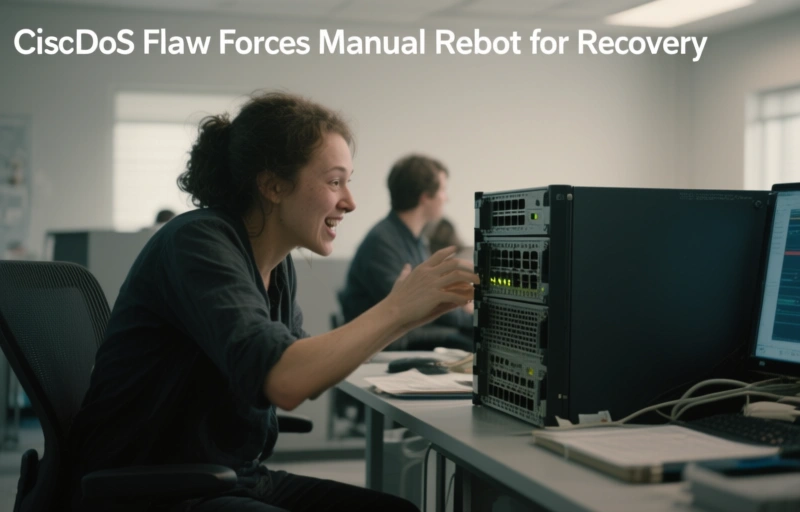
Cisco patched a DoS flaw in Crosswork Network Controller and Network Services Orchestrator. The fix requires manual reboot for recovery. Update now to stay protected.
Cisco recently patched a denial-of-service (DoS) vulnerability in its Crosswork Network Controller and Network Services Orchestrator. The catch? If your system is hit, you'll need to manually reboot it to get back online. That's a big deal for network engineers managing critical infrastructure.
### What's the Issue?
The flaw allows an unauthenticated attacker to crash the system by sending specially crafted requests. Once exploited, the device becomes unresponsive until someone physically or remotely reboots it. No automatic recovery here—you have to step in.
Think of it like a dead car battery. You can't just turn the key and hope. You need jumper cables or a tow. Same idea: the system is stuck until you intervene.
### Who's Affected?
This vulnerability targets Cisco's Crosswork Network Controller and Network Services Orchestrator. These tools are used by large enterprises to automate and manage complex networks. If you're running these, you're in the crosshairs.
- **Crosswork Network Controller**: Helps manage multi-layer networks.
- **Network Services Orchestrator**: Automates service delivery across networks.
Both are critical for keeping data flowing smoothly. A DoS attack here can disrupt operations, costing time and money.
### Why Manual Reboot?
Cisco's advisory says the flaw causes a complete system freeze. No watchdog timer or fallback kicks in. That's why a manual reboot is the only fix. It's a reminder that even advanced tech has limits.
Compare it to a frozen computer. You can't just close a program or wait it out. You hold the power button and restart. Same frustration, higher stakes.
### How to Protect Yourself
Cisco released a software update to patch the vulnerability. Here's what you need to do:
- **Update immediately**: Install the latest version from Cisco's support site.
- **Segment your network**: Limit exposure by isolating critical systems.
- **Monitor for unusual traffic**: Watch for patterns that might signal an attack.
Don't wait. Attackers are always scanning for unpatched systems. A quick update can save you a headache later.
### Real-World Impact
Imagine a hospital network going down because an attacker exploits this flaw. Patient data, communication systems, and critical monitoring tools could stop working. The manual reboot might take minutes, but those minutes matter.
Or think about a financial firm processing millions in transactions. A DoS attack could halt trading, leading to losses. The manual reboot becomes a race against time.
### Final Thoughts
This flaw isn't the most complex, but its impact is real. Cisco acted fast with a patch, but the manual reboot requirement shows how fragile some systems can be. For network pros, staying updated is your best defense.
The takeaway? Treat every update like it's urgent. Because in networking, downtime isn't just annoying—it's expensive.
> "A system that requires manual recovery is a system that needs better design." — A network engineer's wisdom
A deeper breakdown of GoLogin Review 2026 — Fast, affordable anti-detect browser with cloud profiles - real examples, numbers, and what actually works.